Helping Individuals with Disabilities Experience the Gift of Prayer

Jenn Soehnlin

Friday, April 24, 2026


I’m a mother of two teenage sons who both have special needs. And I serve in the disability ministry at my church, loving on individuals aged 16 and above (who I will call my friends throughout this article) who have disabilities. I love teaching about prayer, especially praying Scripture, and I’ve been on the lookout for resources to help my children and my friends grow in their own prayer life and their relationship with God.

I’ll share three strategies I use to help my kids and my friends pray. And then I’ll share several resources you may find helpful for working with your own children, students, or individuals you serve in ministry (who I’ll refer to as your friend or friends in this article).

Disclosure: some of the links in this post are Amazon affiliate links. If you click on the link and purchase the item on Amazon, I will receive a small affiliate commission at no extra cost to you. Thank you for supporting my ministry with your purchases!

Adaptive Prayer Strategies:


1) Pray with your friend.

Pray with them, not just for them. Be a model of prayer as simply communicating with God. When we pray out loud, we’re giving our friends words, rhythm, and confidence to approach God themselves.

I encourage you to pray Scripture and gently personalize it. After reading a Bible study or when you come across a verse you want to pray, include your friend’s name into the verse so that you help your friend see that God’s Word is not distant—it’s for them, right here, right now. For example, you might pray: “Lord, thank You that You are with (insert name) wherever they go. Help them feel Your peace today” (based on Joshua 1:9).

Over time, these repeated truths and prayers begin to take root in their hearts and may become part of their own prayers.


2) Meet them exactly where they are in prayer based on their ability.

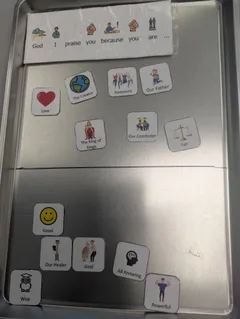
If they are nonverbal, use signs or picture cards or communication devices to indicate what they want to pray for. Give them a prompt such as Thank you God for __ and let them indicate what they want to thank God for and then pray about that together. At our church ministry, we use prayer trays (pictured on the left: they are baking trays with magnetized picture tiles) so that our friends can select what topic(s) they want to pray about. We have three trays: I praise You God because you are__, I thank You God for__, God help me __ .

If they are able to pray whether through speech or sign or device give them prayer prompts so they learn new ways to pray. They can often get stuck in repetitive prayers, praying the same way all the time. There’s nothing wrong with that, but sometimes we all need prompts to help us keep our prayer lives fresh and we can do the same for our children/friends.

And some of our friends may have incredible prayer lives. One of my friends with Down syndrome can outpray me. He is an incredible intercessor, praying for everyone he knows and loves and came across. He perseveres in prayer, consistently praying for each person over and over again without discouragement. I think I’ve learned more about prayer from him than I could ever team him. Encourage that prayer life, but sometimes add a little extra direction. My powerful intercessor friend could pray all day if we let him, so we remind him of how much time we have, and give him other prayer prompts, such as “Let’s thank God today for five minutes,” so he is reminded of other things we could pray about.


3) Meet them where they are at in prayer based on their interests, gifts, personality, and learning style.

Each and every one of us are uniquely, fearfully, and wonderfully made. Because we are all individuals, we all have unique gifts and ways of processing the world and even ways we connect with our Savior. So tap into that. Be creative about meeting them in a way where you can steward their gifts and passions, and nurture their spiritual growth and prayer life simulaneously.

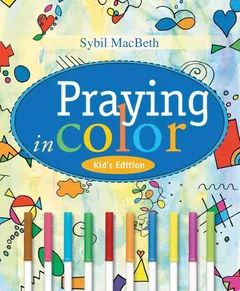
For example, one of my sons tends to repeat the same line of his prayer every single day. But he loves art and drawing and is taking an online digital animation class. He loves it. So I did a little research and learned about a book called Praying in Color that we use to encourage our son to doodle or draw his prayers. Maybe one day we’ll even ask him to animate a prayer. Art is how he expresses himself and we are learning how to help him express his heart and his desires to God through the very gift we have given him.

My other son has a hard time sitting still while praying so we’ve embraced prayer walks. We’ll walk around the neighborhood or go for a walk through the woods and pray togehter and he can express his prayers much better that way, then if we asked him to pray while sitting still at home.


Adaptive Prayer Resources:


Simply the Gospel

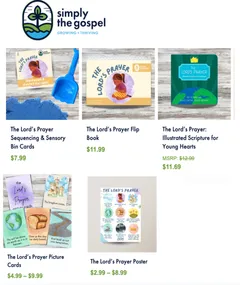
Simply the Gospel has lots of visual and adapted curriculum for teaching Bible stories and how to pray. I especially love the materials they have for helping us teach our kids how to pray The Lord’s Prayer available in their shop, and they have free prayer picture cards on their website under free resources.


Awe and Wonder

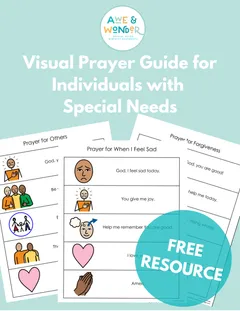
Awe and Wonder has wonderful adapted curriculum for individuals with disabilities. On the website if you go under Resources you’ll find free downloadable visual prayer guides to help guide your children/friends in prayer.


Prayer Through Pictures

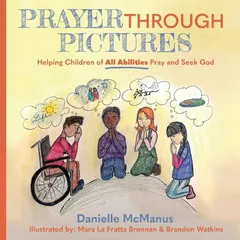
Prayer Through Pictures by Danielle McManus includes pictures with each word to help individuals understand and visualize their prayers. It uses simple images alongside words and short prayers to help children engage with God and God’s word in a more accessible way. This book includes prayers for certain times of the day (before meals, before bed etc) making this great for parents/caregivers, and includes praying the Lord’s Prayer.


Jesus, Let’s Talk

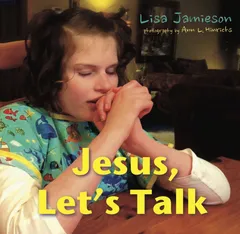
Jesus, Let’s Talk by Lisa Jamieson is a beautifully simple, visual resource that helps individuals begin to connect with God in prayer. Using pictures, short phrases, sign language, and gentle prompts, it invites children into conversation with Jesus in a way that feels natural and accessible. This is a great resource for showing our friends/children that prayer doesn’t have to be complicated to be meaningful.


I’m sure there’s a lot more really great resources out there, but hopefully you found a few resources or ideas that you want to try. Keep praying for and with your friends, and may you, your ministry, and your friends be blessed as you grow in prayer together!